
A cylinder seal is small enough to disappear in a closed hand. Roll it across damp clay, however, and its curved surface becomes a band of figures, animals or writing. A portable object leaves a mark that can remain after its user has gone.
In ancient Mesopotamia, this was useful wherever people needed to identify responsibility: on a document, a container or a secured doorway. Seals belonged to the practical world of transactions, but their images could also express devotion, protection and rank. Understanding them means looking at both the object and the impression it produced. The Met: Old Babylonian cylinder seal, 1987.96.5
How a rolling seal worked
A stamp presses one surface into a material. A cylinder turns as it moves, transferring the design around its circumference. Engraving was cut into the surface, so the corresponding forms stood out in relief on the clay. The resulting image was reversed, rather as a printed impression reverses the block that made it. A longer roll could repeat the design. The Met: Cylinder Seals—Tiny Treasures That Leave a Big Impression
The size and material varied. Stone was common, but shell and other materials were used too. These were miniature objects, not the large inscribed cylinders sometimes displayed in museums. When a museum shows a seal beside a fresh-looking strip bearing its design, read the label: the strip may be a modern impression made to reveal the carving. The Met: Cylinder Seals—Tiny Treasures That Leave a Big Impression
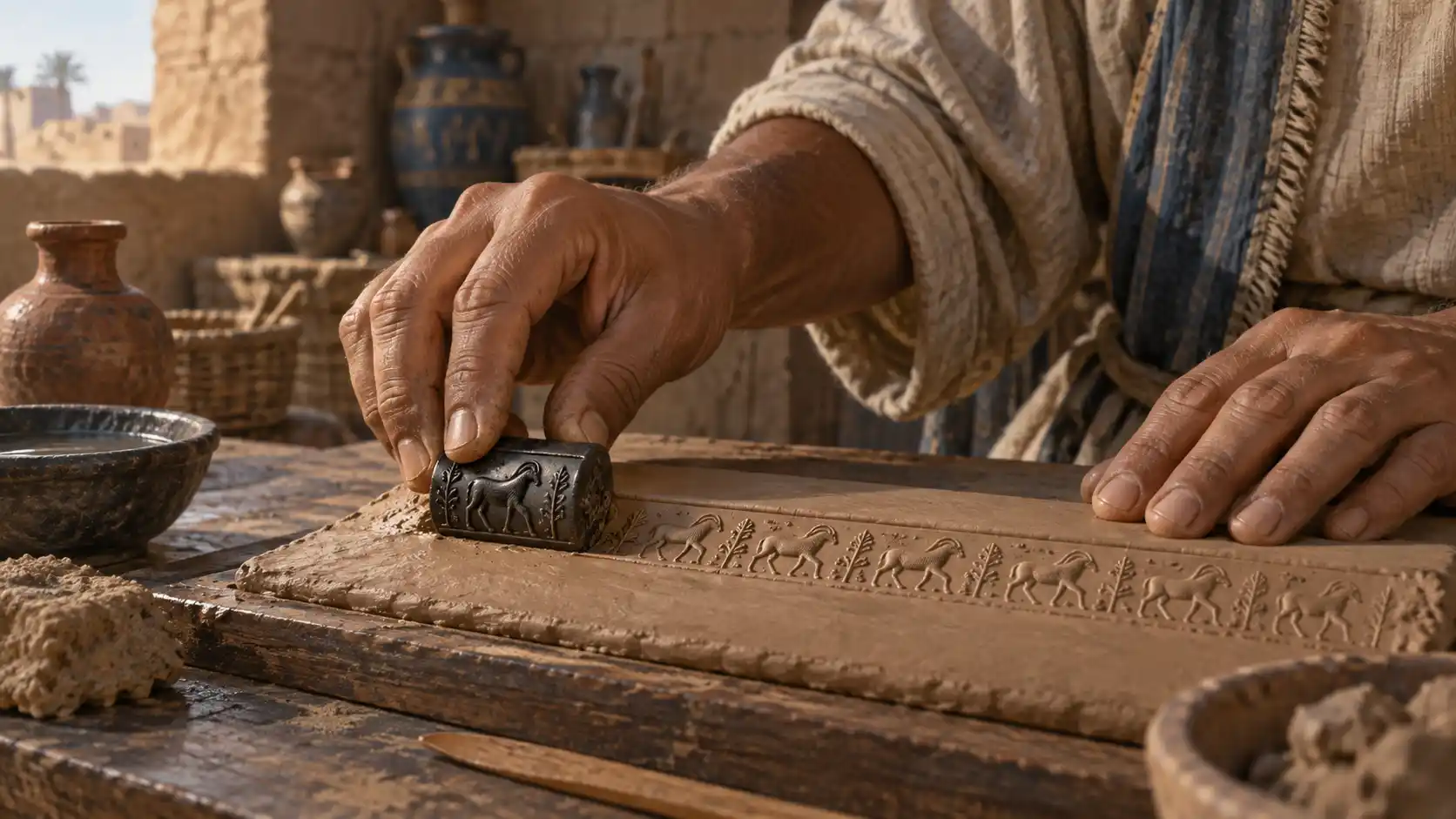
The illustration above explains the action in broad terms. Its animal pattern is invented; it is not a reproduction of an excavated seal. For a documented example, The Met’s hunting seal, dated approximately 2250–2150 BCE, bears an inscription naming Balu-ili, a cupbearer and court official. Its combination of imagery and an owner’s name shows how personal identification could occupy a very small surface. The Met: hunting seal naming Balu-ili, 41.160.192
What a sealed jar could tell you
Clay sealings were applied to closures on jars, baskets and doors. The important surface was often the clay attached to the closure, rather than the body of the vessel. Its impression associated the secured contents with an owner or responsible authority. The Met: Old Babylonian cylinder seal, 1987.96.5
Think of the difference between closing a container and leaving evidence about its closure. A lid keeps contents inside; an identifiable mark supplies an additional piece of information. A sealing could help make interference apparent, but it was not an unbreakable lock. Its usefulness depended on people recognising the mark and treating it as meaningful.
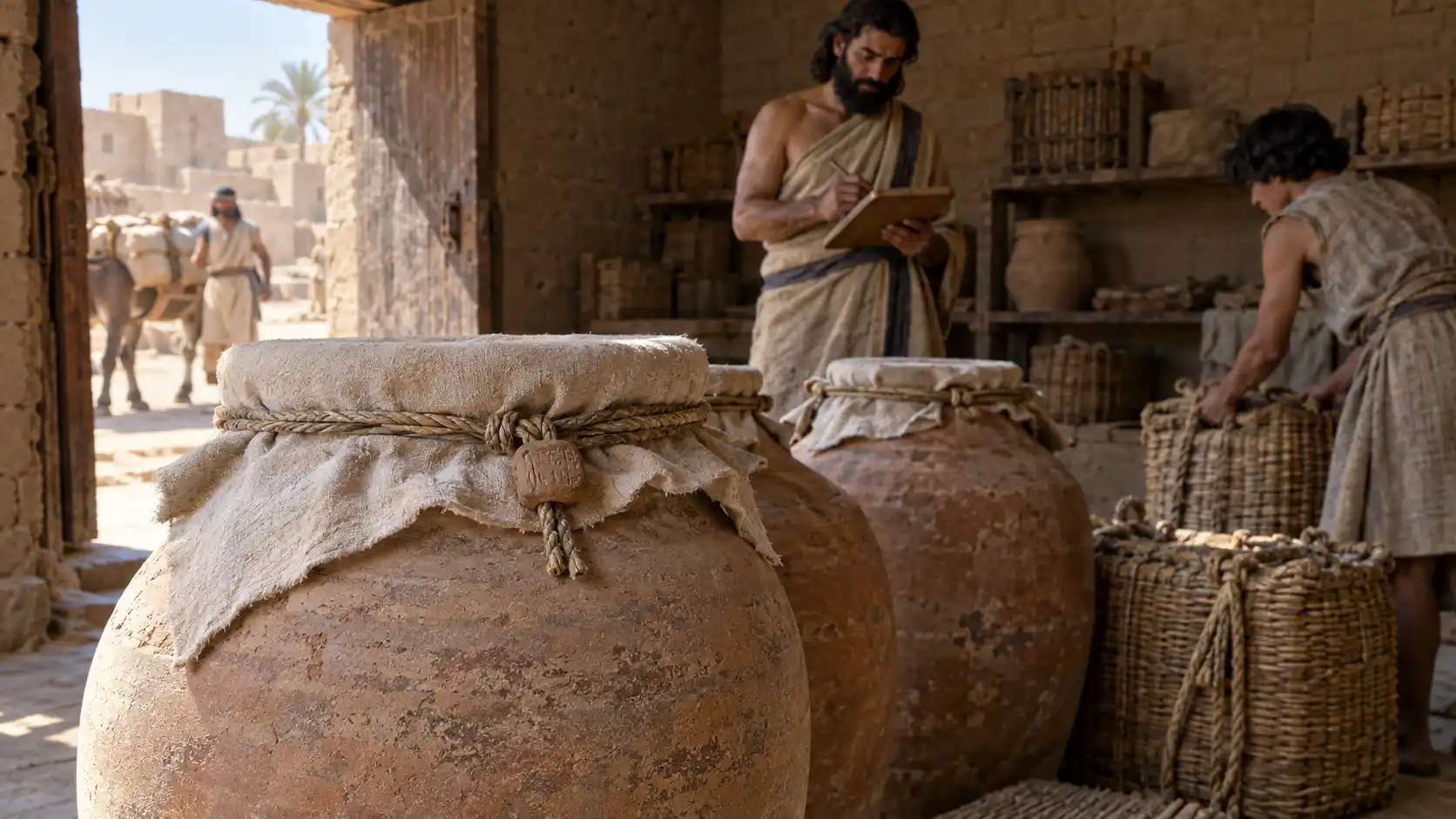
This is also why “an ancient signature” is a helpful starting comparison rather than a complete definition. An impression on a document and a sealing on stored goods could serve related purposes, while operating in different situations. Neither should be read without asking what it was attached to and where it was found.
Writing and sealing could share the same tablet
A small administrative tablet in The Met, dated about 3100–2900 BCE and probably from Uruk, carries both early writing and impressions of a cylinder seal. The museum interprets the written account as a record of grain distribution, while noting the difficulty of interpreting these early texts with certainty. The Met: administrative tablet, 1988.433.1
The impressions extend over the tablet’s faces and edges. According to the object record, they were made before the writing was added; the actual seal has apparently not survived. That distinction matters. Archaeologists can sometimes study a seal’s design through its surviving impressions even when the tool itself is missing. The Met: administrative tablet, 1988.433.1
A craft designed to be seen in clay
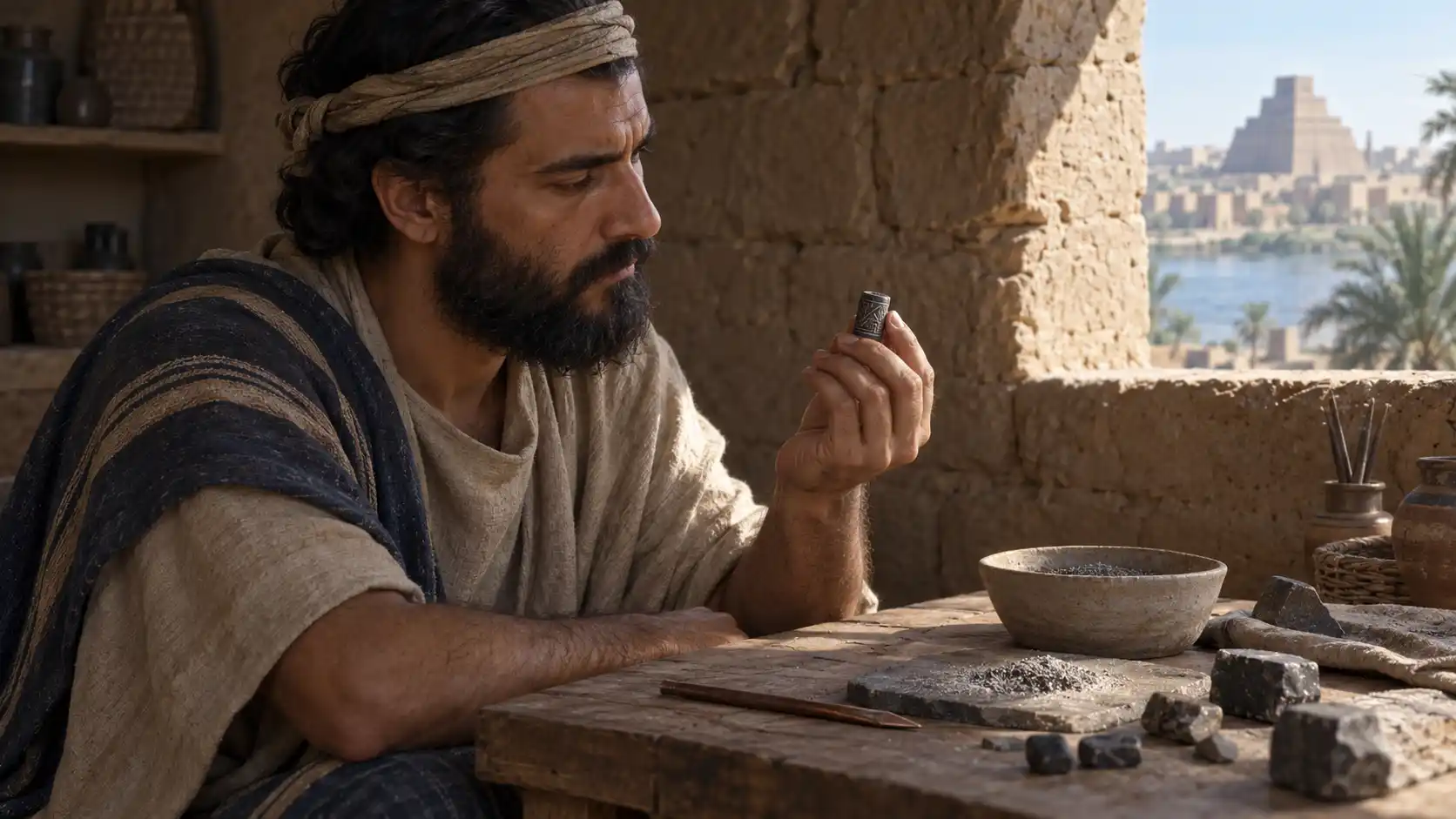
Carving a cylinder required thinking beyond its curved surface. A composition had to remain legible when rolled out, including when only part of it appeared on a small patch of clay. The Met’s hunting example combines figures, trees and animals in a continuous landscape; the design can be inspected as a whole through a modern impression. The Met: hunting seal naming Balu-ili, 41.160.192
Material was part of the object’s character. A different Akkadian seal in The Met, dated about 2350–2150 BCE, was carved from shell and depicts battling deities. Its findspot at Surkh Dum in present-day Iran reminds us that an object’s place of discovery and its period of manufacture are separate pieces of evidence. The excavations there included much older objects alongside later material. The Met: shell seal with battling deities, 43.102.34
Religious imagery should not be mistaken for a picture of the transaction being sealed. A divine encounter could accompany a practical record. In an Old Babylonian example, dated to the eighteenth–seventeenth centuries BCE, The Met identifies Ishtar and other figures alongside an inscription. The imagery places administrative objects within a wider visual and religious culture. The Met: Old Babylonian cylinder seal, 1987.96.5
A later example: a debt recorded inside and outside
The practice also travelled with merchants. A clay tablet case probably from Kültepe, ancient Kanesh in Anatolia, is dated by The Met to the twentieth–nineteenth centuries BCE. It once enclosed a record concerning repayment of a silver loan and carries impressions of four seals. The case repeated the document’s contents on its exterior. The Met: case for a debt-quittance tablet, 66.245.16b
This belongs to a later trading world than the Uruk tablet discussed above. Assyrian merchants used writing, envelopes and seals to manage business across distance. The differing visual styles on the case also reveal contact between Assyrian and Anatolian traditions. The Met: case for a debt-quittance tablet, 66.245.16b
A cylinder seal therefore offers several routes into history. Its material raises questions about craft; its imagery about belief; its inscription about identity; and its surviving use about responsibility. The most revealing question is not simply “What does this picture mean?” It is “What did this mark allow people to do?”
Continue with the beginnings of writing in Mesopotamia or explore how exchange worked before coins.