
A pyramid needed a workforce before it needed another stone. Someone had to organise deliveries, prepare food, repair equipment and keep people working together. The monuments at Giza survive on an extraordinary scale; much of the infrastructure that sustained their builders survives as less spectacular traces in the ground.
Those traces let us give a substantial answer to “Who built the pyramids?” Ancient Egyptian workers did, within projects organised by the crown. The harder—and more interesting—task is understanding how different kinds of work fitted together, and where the evidence still leaves room for disagreement.
Which pyramids are we talking about?
This article focuses on Giza’s Fourth Dynasty projects, in the third millennium BCE. The three principal pyramids are associated with Khufu, Khafre and Menkaure. Giza belongs to a much wider funerary landscape around ancient Memphis, including Saqqara and Dahshur. Egypt’s pyramids were not all built at once, by one workforce, or according to an unchanged design. UNESCO: Memphis and its Necropolis
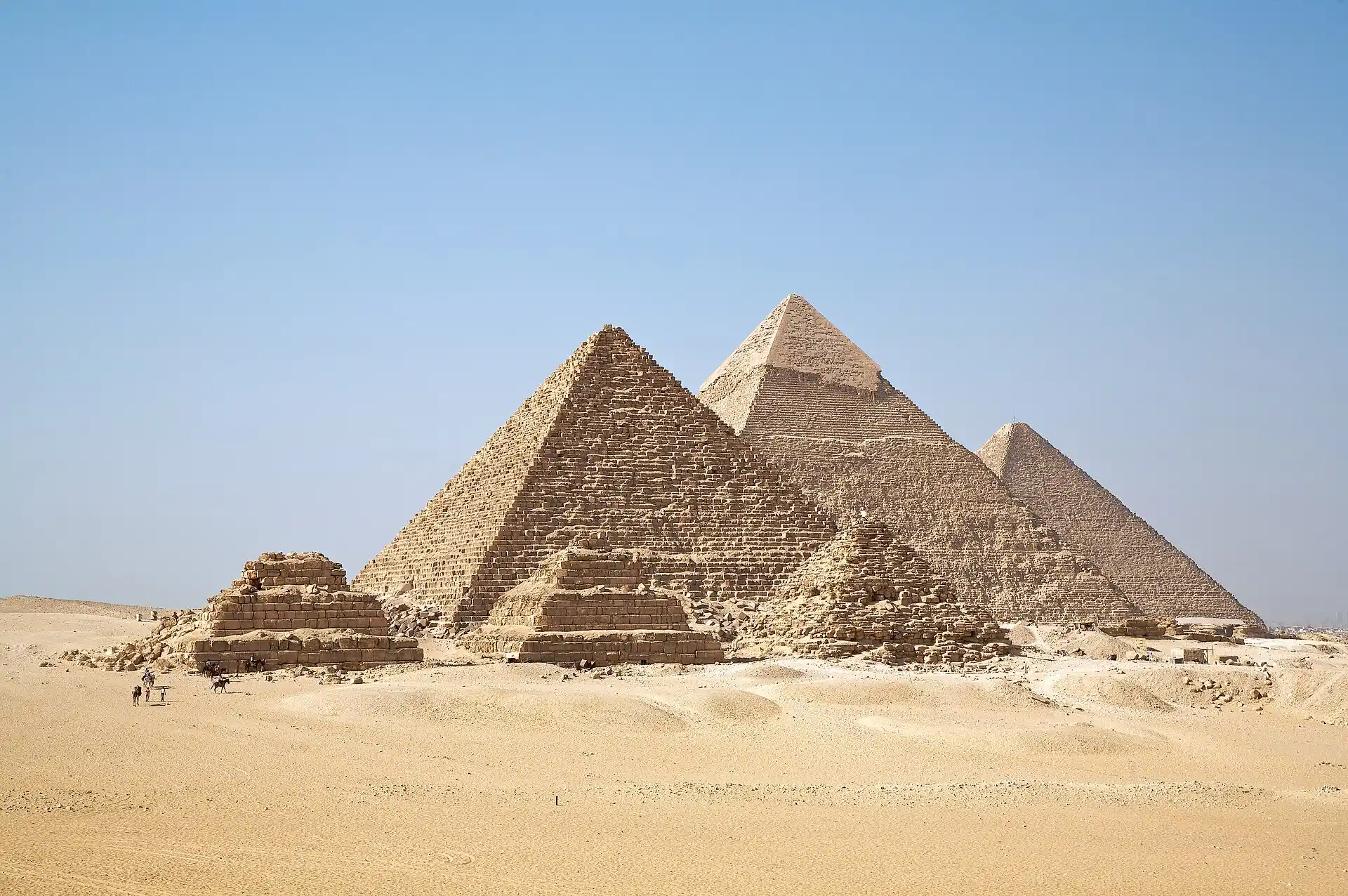

A pyramid was also part of a complex. Khufu’s monument had a temple on its eastern side, now largely ruined. Archaeologists documenting that temple have recovered carved and painted relief fragments, alongside evidence of its construction. The building programme therefore required much more than piling up the core of the pyramid: it involved carefully finished surfaces, religious spaces and specialised craftsmanship. AERA: The Great Pyramid Temple
Finding the people behind the stone
At Heit el-Ghurab, south of the Sphinx, Ancient Egypt Research Associates has excavated a Fourth Dynasty settlement with workshops, storage areas, kitchens, houses and administrative buildings. Its inhabitants included people who supported construction as well as those directly engaged in it. The excavators connect the settlement with the projects of Menkaure, Khafre and probably Khufu. That final qualification matters: the surviving evidence does not give every building an equally secure connection to every king. AERA: The Lost City of the Pyramids
Recognising a settlement is only the start. An archaeologist must work out how a space was used, when that use changed and what was removed before abandonment. A long room is not automatically a dormitory. An impressive house is not automatically the residence of the person whose name appears on a nearby object.
Area C at Giza illustrates the problem. Flinders Petrie identified its long galleries as workers’ barracks. Re-excavation by AERA led to a different interpretation: storage and some craft activity were more likely, probably during Khafre’s project. A familiar label had to be tested against deposits and patterns of use. AERA: Area C
Were the builders enslaved?
The familiar image of an entirely enslaved mass driven across the plateau is an inadequate account of the evidence. In his interview with NOVA, archaeologist Mark Lehner describes an Egyptian workforce organised into crews and a wider society mobilised around construction. He also distinguishes estimates and experimental calculations from an actual surviving headcount. NOVA: interview with archaeologist Mark Lehner
But replacing “slaves” with “free volunteers” would create another oversimplification. Organisation, accommodation and provisioning do not, by themselves, tell us whether an individual could refuse the work. Nor should payment in food be confused with a modern employment contract. The most useful distinction is between what the material evidence establishes about the work and what it leaves uncertain about each worker’s obligations.
We should therefore resist a single label for every person involved. A skilled mason, an administrator and someone supplying provisions occupied different roles. Identifying an Egyptian workforce is a strong conclusion; reconstructing the legal circumstances and motivations of all its members requires much more evidence.
Feeding a construction project
The settlement’s large grain silos and food-production spaces make provisioning central to the story. AERA identifies the distribution of grain for bread and beer as part of the system sustaining its population. Materials also reached the settlement by waterways during the Nile inundation. These were links between construction and the productive resources of the country. AERA: The Lost City of the Pyramids
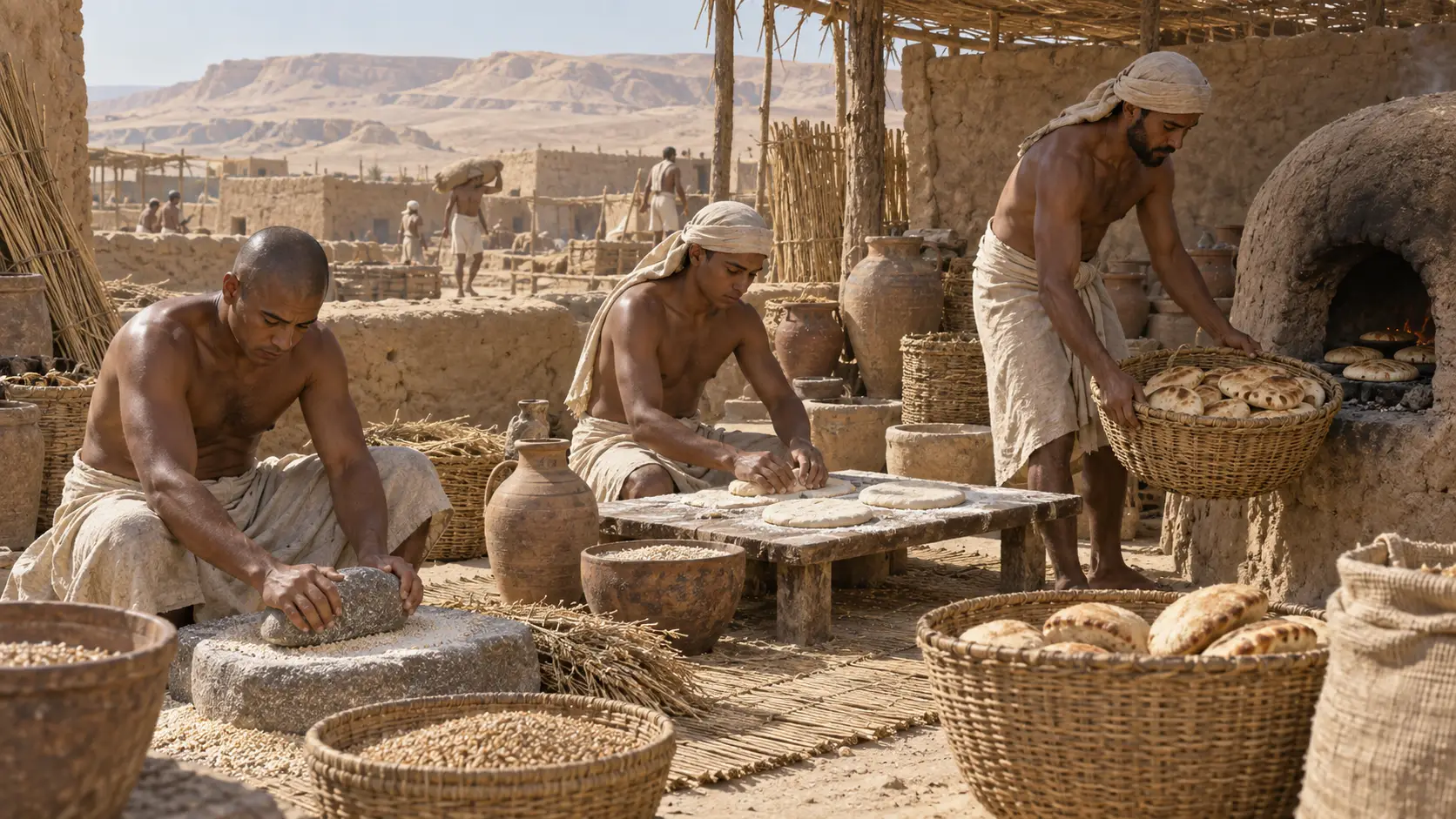
The imagined scene gives food preparation a human scale, but its bakery is not an excavated floor plan. To understand the real site, we need the locations of installations, their contents and their dates. A picture of people grinding grain cannot answer those questions on its own.
Provisioning also changes how we count labour. A calculation limited to people handling stone leaves out those who kept them supplied. The pyramid depended on work taking place away from its rising walls. Thinking through those dependencies is more informative than imagining a huge crowd performing one identical task.
Rubbish can preserve an administrative history
At the Kromer dump, discarded material offers another route into that organisation. AERA has studied clay sealings bearing royal names, along with the directions from which baskets of debris were emptied. Sealings naming Khufu and Khafre help connect the waste to successive building phases. The researchers regard the Khufu material as important evidence for an earlier settlement beneath the better-known later one. AERA: Kromer Dump Site
This is an interpretation assembled from small relationships: an impression, a deposit, a direction of tipping, a possible place of origin. Because rubbish has been moved, it cannot always provide the contextual precision of an object found where it was used. Its value lies in what those surviving relationships allow researchers to reconstruct.
Moving stones is a different question
Lehner’s construction experiments for NOVA tested particular operations, including hauling blocks and estimating the labour involved. He explicitly notes that they did not reproduce the whole ancient project: modern equipment was used in parts of the experiment. A successful test can show that a proposed operation is feasible without proving that it was the precise method used at Giza. NOVA: interview with archaeologist Mark Lehner
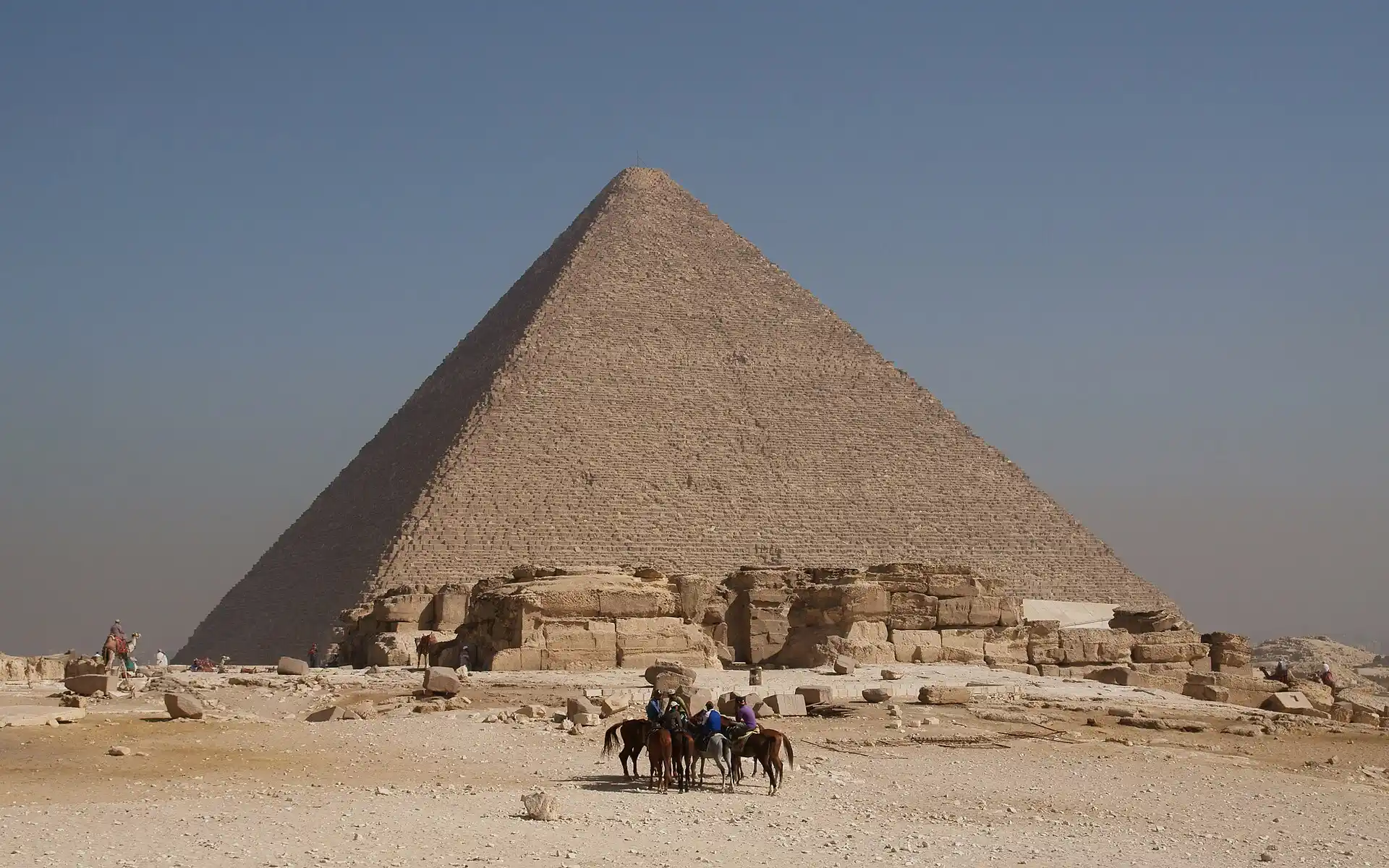

The modern photograph helps us inspect the monument’s scale and surviving masonry. It cannot show a vanished construction ramp or settle which arrangement of ramps was used at different heights. Explaining the workforce and resolving every engineering detail are separate research problems.
The answer to who built Giza becomes richer when we follow the evidence beyond the stone. Workshops, food supplies, administrative traces and changing interpretations of buildings reveal a coordinated Egyptian undertaking. The remaining uncertainties concern how that undertaking operated in detail. They are questions about human work, and archaeology keeps giving us better ways to ask them.