
Inside the Great Mosque at Kilwa, surviving supports divide a space once used by worshippers. Its architecture belongs to the same coastal world as palaces, houses and landing places, but it answers a different need. A port was somewhere to practise a faith and belong to a community, as well as somewhere to trade.
Islam became deeply rooted in Swahili societies over many centuries. Its history cannot be reduced to a single arrival, a single group of migrants or one uniform pattern of conversion. The evidence is most revealing when we follow particular places and the ways their religious spaces changed.
Before the great monuments
The archaeology of Shanga, in the Lamu archipelago of present-day Kenya, includes a sequence of mosque buildings reaching back to the eighth century. Early structures were modest; later phases used coral masonry and provided larger spaces. The sequence shows religious practice developing within the life of a settlement. Wynne-Jones and Fleisher (2021): The Eastern African Coast
It does not provide a census of belief. A small early mosque might serve some residents, visitors or both. A larger later building suggests a changing community and greater investment, but its floor area cannot tell us what every person in the town believed.
This is why “the arrival of Islam” can be too compressed a phrase. It brings together several processes that need to be distinguished: the presence of Muslims, conversion among local people, the development of institutions and changes in the built environment.
A place for collective worship
The first photograph takes us into Kilwa’s Great Mosque. The surviving structure includes work from different periods, rather than one building completed at a single moment. Its enlarged prayer spaces show how a place of worship could be maintained and transformed across generations. Zamani Project: Kilwa Kisiwani Monuments
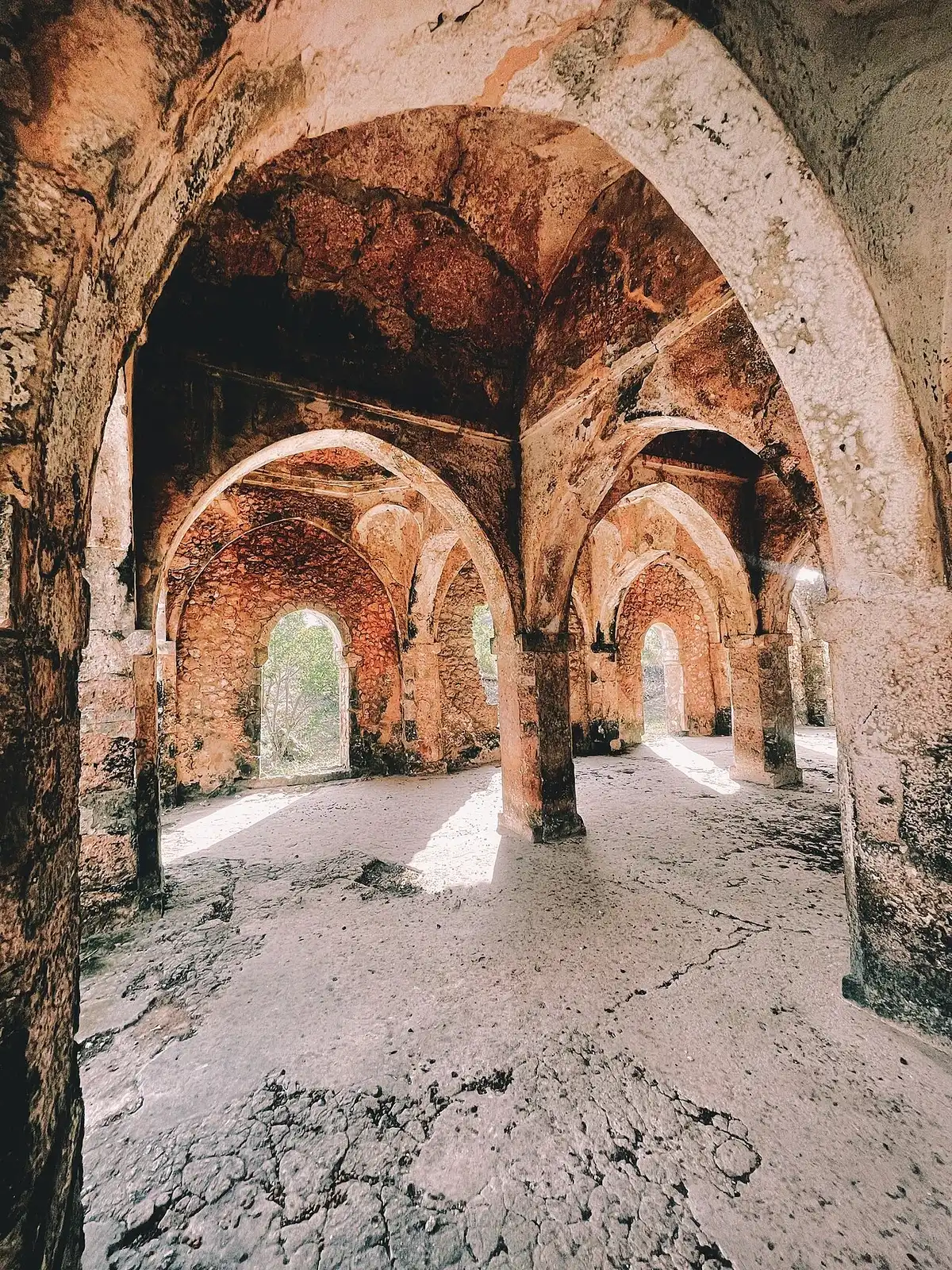

Within Islamic practice, a mosque provides a setting for prayer, while the larger congregational mosque has a particular role in Friday worship. A building used repeatedly by a community becomes part of how people move through a town and organise shared time.
Those activities should remain at the centre of the interpretation. It is possible to study a mosque only as a monument, measuring its walls and dating its construction while forgetting why people entered it. Architecture is evidence of building skill, but also of a place made for use.
Smaller mosques matter too
Kilwa’s Small Domed Mosque provides another example, dating to the mid-fifteenth century in the Zamani Project’s account. Its more compact form sits alongside the city’s larger religious monuments. A history focused only on the biggest building would miss this variety. Zamani Project: Kilwa Kisiwani Monuments
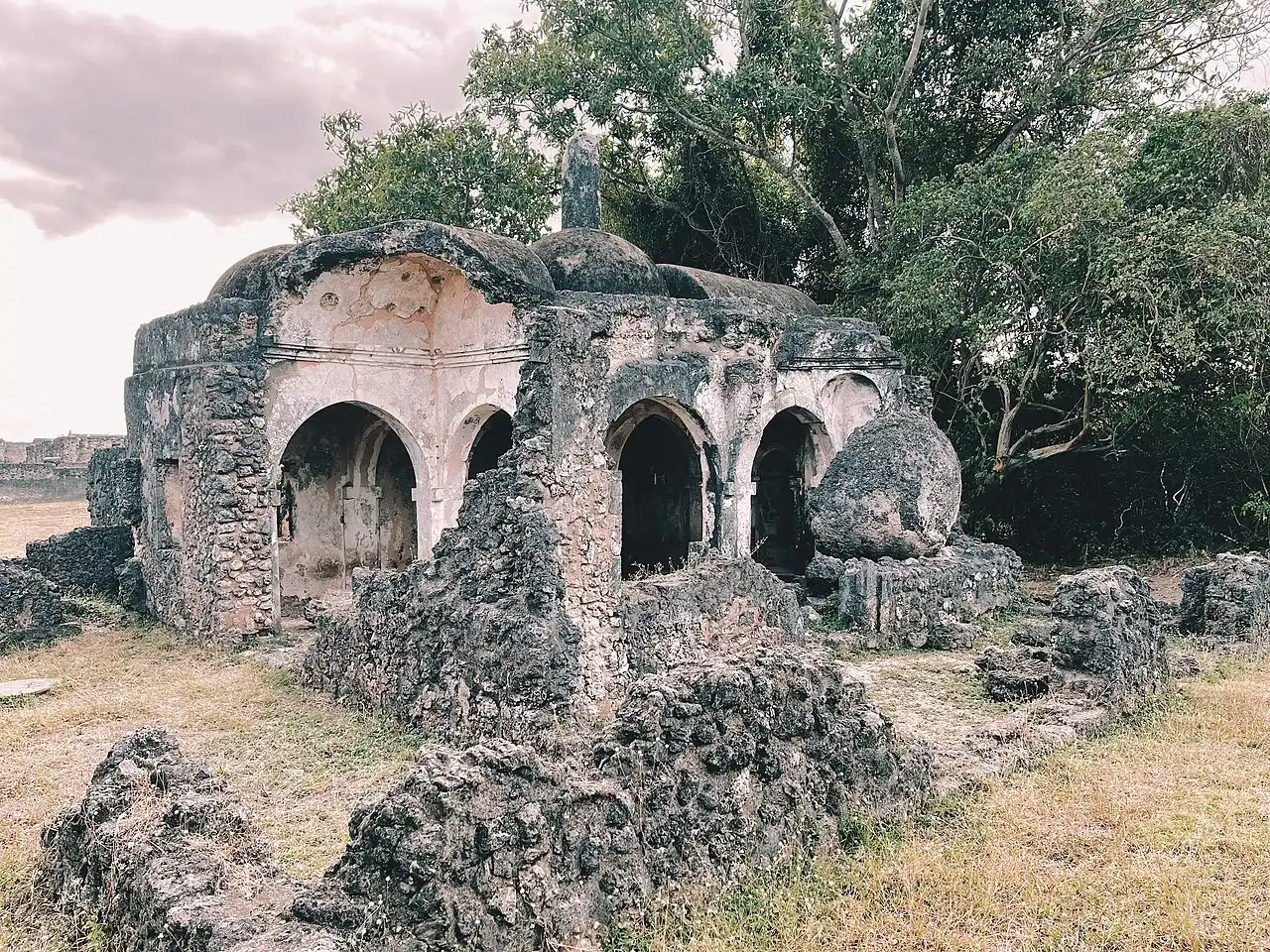

Size alone does not establish who worshipped in a mosque or how its community was organised. It does invite comparison: where was it located, which entrances connected it with nearby spaces and how did it relate to other buildings?
These questions keep the town in view. A religious building is not an isolated object. Its meaning also depends on the routes people took to it, the activities around it and its relationship with homes and places of authority.
Washing, water and the built environment
Preparation for prayer connected religious practice with the practical problem of obtaining freshwater. At Songo Mnara, water installations beside a mosque included imported celadon ceramics incorporated into their construction. The arrangement brought a material associated with oceanic exchange into a setting for washing. Benjamin Leonard (2023): Saving for the Season
That connection is more specific than saying trade “spread culture”. It shows objects being used within a local practice. The ceramics’ journey matters, but so does the decision to set them into a particular structure after they arrived.
Water also reminds us that religious spaces needed maintenance and resources. Providing a place of worship meant accommodating bodies and everyday actions, not only creating a prominent skyline.
Gedi: religion within an urban landscape
Farther north, Gedi—also often written Gede—preserves another Swahili urban setting in present-day Kenya. It lies inland from the immediate shore. UNESCO places the town’s history between the tenth and seventeenth centuries, with particular prominence in its later phases. Its ruins include houses, mosques, tombs and water infrastructure. UNESCO: The Historic Town and Archaeological Site of Gedi
The Great Mosque shown below belonged to that wider town. Its remains should be read beside the streets and domestic spaces, rather than as evidence of a community consisting only of monumental buildings.
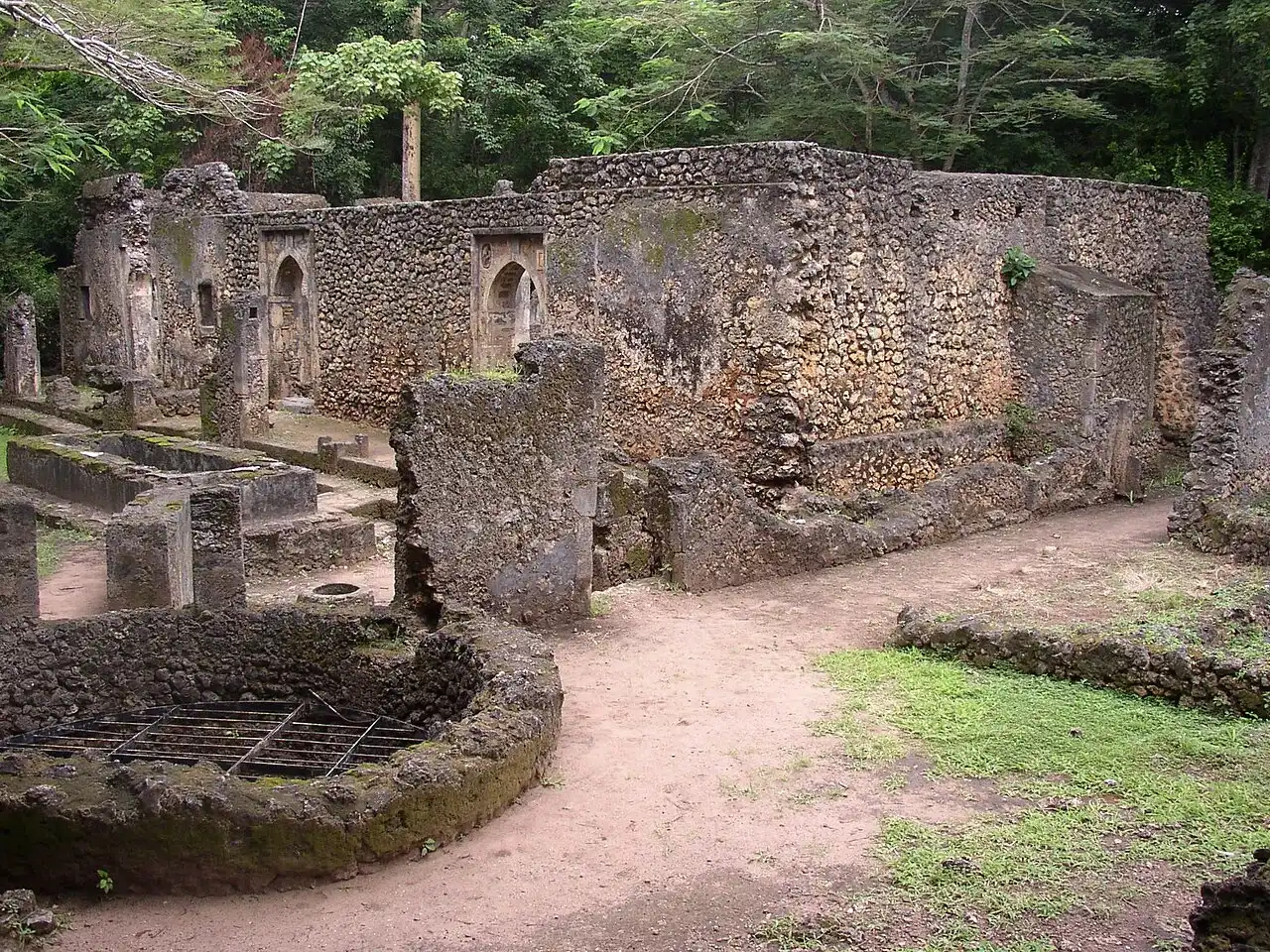

Gedi’s archaeology also makes social differences visible. More modest housing existed beyond the inner concentration of stone-built monuments. The impressive buildings are therefore part of the settlement’s history, not an adequate picture of the circumstances of all its residents. UNESCO: The Historic Town and Archaeological Site of Gedi
Faith in the evidence
- Buildings
- Show investment, construction phases and spaces intended for religious use.
- Objects and installations
- Help connect worship with material practices such as washing.
- Belief
- Cannot be read directly from the size or wealth of a monument.
An African history of Islam
Calling these communities African and Muslim describes overlapping parts of their history. It should not create a choice between them. Coastal people participated in a wider religious world while shaping buildings, practices and social relationships in particular African places.
Nor should commercial connections become a complete explanation for faith. They created opportunities for contact, but they do not let us reduce a person’s religious commitment to a business decision. The reasons individuals adopted, maintained or interpreted beliefs are often beyond the surviving evidence.
What the buildings do show is sustained commitment to places of worship. Small structures were rebuilt, larger ones expanded, and religious practice became embedded in the organisation of towns. The Swahili coast was connected across the ocean, but its communities also made belonging tangible close to home.